
Mountains
Africa's third highest peak, glaciated, mist-shrouded and endlessly dramatic.
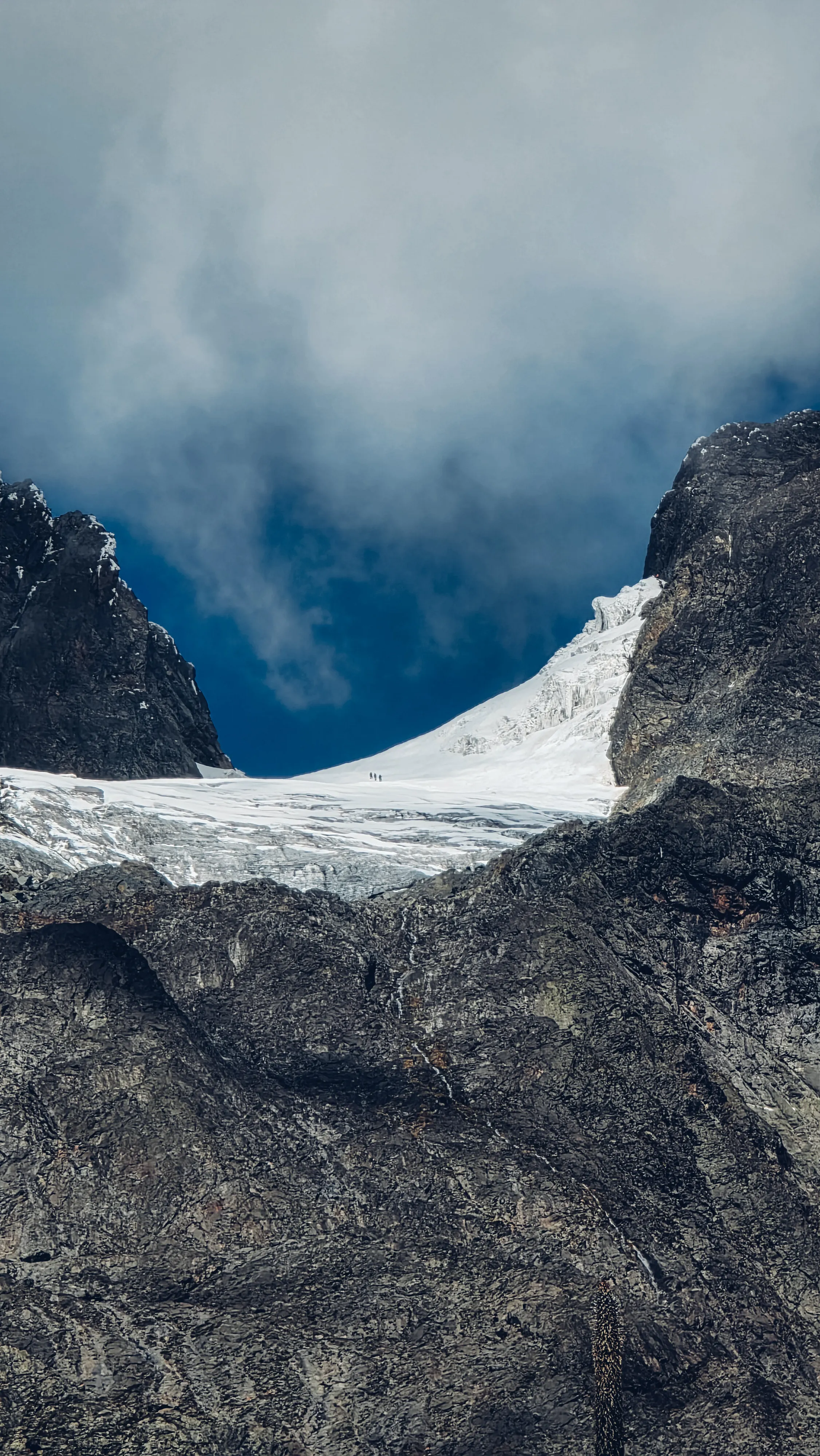
Mount Stanley is the highest massif in the Rwenzori Mountains and sits along the border between Uganda and the Democratic Republic of Congo. Its highest summit is Margherita Peak at 5,109 metres, making it Uganda's highest point. But Mount Stanley is much more than Margherita. The massif contains several peaks, including Alexandra, Elena, Savoia and other summits, with enormous cliffs, ridges, glaciers and exposed rock connecting them. When you stand in the upper Rwenzori and look at Stanley, it is easy to understand why this mountain has such a reputation.
The mountain also has a fascinating history. In 1888, Henry Morton Stanley became one of the first Europeans to clearly recognise the snow-covered Rwenzori from a distance, although earlier explorers had also reported seeing mountains in the region. It was not until the famous 1906 expedition led by the Duke of Abruzzi that the highest peaks were properly explored and climbed. On 18 June 1906, the Duke and his Italian guides reached the highest summit of Mount Stanley and named it Margherita Peak in honour of Queen Margherita of Italy. They were working with equipment that seems almost unbelievable by today's standards, while also conducting scientific, geological and botanical research across the range.
Today, the most common approach to Mount Stanley's Margherita Peak is through the Central Circuit. From Nyakalengija, the trail passes through rainforest, bamboo and heather before reaching the higher valleys and eventually Bujuku. From there, climbers head towards Scott Elliott Pass and Elena Hut, which is the main staging point for the summit attempt. Summit day is where everything changes. You leave the vegetation behind and enter the high alpine environment, moving across rock, snow and glaciated terrain towards Margherita. The final sections involve technical movement and rope work, so this is not simply a matter of walking uphill until you reach the top.
What makes Mount Stanley particularly interesting is how quickly the environment changes. You can start your expedition surrounded by dense tropical forest and, several days later, find yourself standing among bare rock, ice and snow at more than 5,000 metres. The Rwenzori are not volcanic mountains like Kilimanjaro; they are an ancient uplifted mountain block, which gives Stanley its dramatic rock formations and deep valleys. The mountain also forms part of the incredible landscape around Bujuku, where Stanley, Speke and Baker rise around the valley. And although the glaciers have dramatically reduced over the years, the remaining ice is still an important part of what makes the upper mountain so extraordinary.
Climbing Mount Stanley is therefore about much more than reaching Uganda's highest point. It is a long journey through some of the most unusual terrain in Africa, where weather can change quickly, rocks become exposed and slippery, altitude becomes a serious factor and the final ascent requires proper mountain skills. You need to respect the mountain from the moment you start. But when you finally stand on Margherita Peak, with the Rwenzori stretching around you and the border between Uganda and Congo beneath you, you realise why this mountain has attracted explorers and climbers for generations. Mount Stanley isn't just Uganda's highest mountain; it is one of the great experiences of the Mountains of the Moon.