
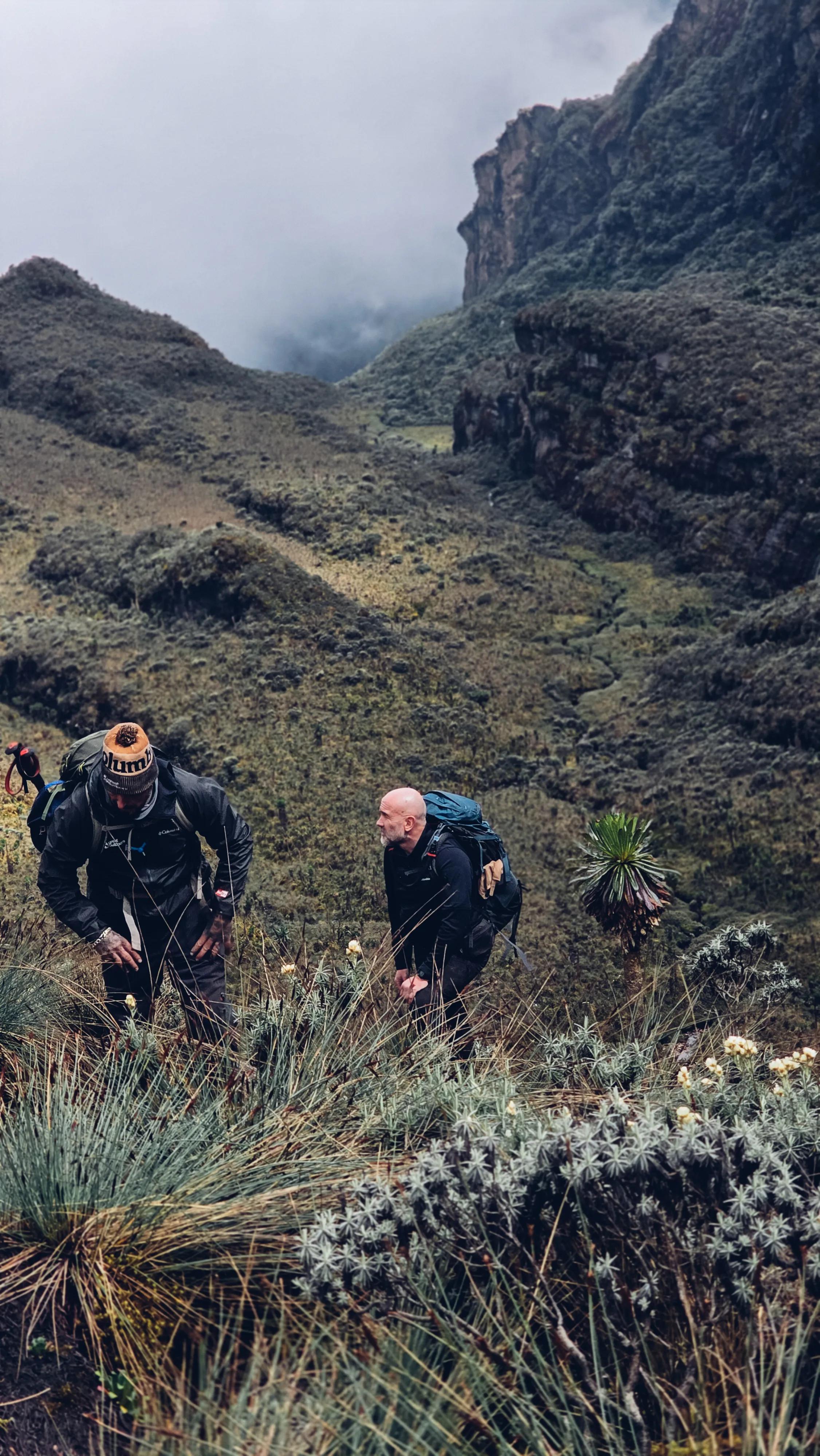
Packing for the Rwenzori Mountains is about more than bringing the right gear. This guide explains what to pack, why each item matters, and how proper preparation will help you stay safe, warm and comfortable throughout your expedition.
Packing for the Rwenzori Mountains isn't like packing for an ordinary hike.
During a single expedition, you'll walk through hot tropical rainforest, cross muddy bogs, hike across alpine valleys and, if you're climbing Margherita Peak, make your way over snow and glaciers. Temperatures can range from hot and humid during the day to well below freezing on summit morning.
That's why every item you pack has a purpose.
Before we look at what to bring, there's one important rule every climber should know.
PACK SMART: You have a 12.5kg limit
Every climber is allowed one duffel bag weighing up to 12.5 kg, which will be carried by a porter throughout the expedition.
Your daypack is separate from this limit and should only contain the items you'll need while hiking each day.
Because of the weight limit, avoid packing unnecessary clothing or equipment "just in case." Instead, choose lightweight, high-quality gear that serves a clear purpose. Packing light doesn't mean sacrificing comfort—it means packing wisely so you have everything you need without carrying unnecessary weight. _________________________________________________________________________
WHAT YOU'LL NEED EVERY DAY
These are the items you'll use throughout your expedition, from the first day on the trail until you reach the summit.
A Comfortable Daypack
While your porter carries your duffel bag, you'll carry your own daypack throughout the hike. It should contain everything you'll need before reaching camp, including drinking water, snacks, your rain jacket, an extra warm layer, sunscreen, sunglasses, your camera, personal medication and any other essentials you may need during the day's hike. Choose a backpack that fits comfortably because you'll be wearing it for several hours every day.
Breathable Hiking Clothes
The lower sections of the Rwenzoris are often warm, humid and physically demanding. Wear lightweight, breathable hiking shirts and trousers that dry quickly and allow your body to stay cool while climbing. Avoid cotton whenever possible because it absorbs sweat and rain, making you colder once temperatures begin to drop.
Waterproof Hiking Boots
A good pair of waterproof hiking boots provides grip, ankle support and comfort on steep, rocky and muddy trails. Perhaps the most important piece of advice is to avoid bringing brand-new boots. Wear them on several hikes before your expedition so they're properly broken in and less likely to cause painful blisters.
Knee-High Gumboots
One of the biggest surprises for first-time climbers is how much time they spend wearing gumboots. The Rwenzoris are famous for their deep bogs, and in many places gumboots are far more practical than hiking boots. Your gumboots should reach just below your knees, preventing water and mud from entering while crossing deep, muddy sections of the trail. If possible, spend some time walking in them before your expedition, as they feel quite different from hiking boots.
Rain Gear
Rain is always a possibility in the Rwenzoris, even during the dry seasons. Every climber should bring a waterproof rain jacket and waterproof rain pants, while some hikers also find a lightweight umbrella useful on the lower sections of the mountain. Staying dry isn't just about comfort—it also helps your body retain heat and reduces the risk of becoming dangerously cold.
Sun Protection
Although the Rwenzoris are famous for rain, the sun becomes much stronger as you gain altitude. Pack sunscreen, sunglasses and either a wide-brimmed hat or a comfortable cap to protect yourself from prolonged exposure, especially on clear days above the tree line.
_________________________________________________________________________
WHAT YOU'LL NEED AROUND CAMP AND AT NIGHT
Once you've reached camp, your focus shifts from hiking to resting and recovering. Staying warm during the evening and getting a good night's sleep are essential for the days ahead.
A Warm Sleeping Bag
Temperatures at the higher camps regularly drop close to freezing, so a quality sleeping bag is essential. Bring one rated for 5°C or lower to ensure you stay warm throughout the night and wake up well-rested for the next day's hike.
Thermal Base Layers
A thermal top and thermal leggings are among the most valuable items in your backpack. They provide an extra layer of insulation while sleeping, keep you warm during cold mornings and form the foundation of your clothing system on summit day. They're lightweight, compact and incredibly effective at trapping body heat.
A Fleece Jacket
A fleece jacket provides warmth without adding too much weight. It's ideal for relaxing around camp, chilly mornings and cool hiking days, making it one of the pieces of clothing you'll probably wear most often during your expedition.
Warm Hiking Socks
Always pack several pairs of quality hiking socks. After spending the day walking through rain, mud and bogs, changing into a clean, dry pair of socks is one of the easiest ways to stay comfortable and help prevent blisters.
Camp Shoes or Sandals
Once you've finished hiking for the day, your feet will appreciate a break from boots or gumboots. A lightweight pair of sandals or camp shoes allows your feet to relax while giving your hiking footwear a chance to dry.
Wet Wipes
There are no hot showers on the mountain, so wet wipes are one of the easiest ways to stay fresh after a long day's hike. They're lightweight, take up very little space and quickly become one of the most appreciated items in your bag.
_________________________________________________________________________
WHAT YOU'LL NEED FOR SUMMIT DAY
Summit day is usually the coldest, longest and most physically demanding part of the expedition. You'll typically begin climbing before sunrise when temperatures are at their lowest, so having the right clothing is essential.
A Warm Summit Jacket
Your summit jacket should be heavily insulated and designed for cold mountain environments. A casual jacket that's comfortable around town is unlikely to provide enough warmth for Margherita Peak. A proper insulated mountain jacket will keep you comfortable as temperatures fall below freezing.
Summit Pants
Warm, wind-resistant summit pants worn over your thermal leggings help protect you from freezing temperatures, snow, wind and moisture. They provide an additional layer of insulation that becomes increasingly important as you approach the glacier.
Snow Gloves
Cold hands quickly become painful at high altitude. Waterproof insulated gloves will keep your hands warm while using ropes, scrambling over rocks and crossing glaciers, allowing you to move safely and comfortably.
Head Torch
Summit attempts begin long before sunrise, making a reliable head torch essential. Bring spare batteries as well, since cold temperatures drain batteries much faster than usual.
_________________________________________________________________________
TECHNICAL EQUIPMENT FOR MARGHERITA PEAK
If you're climbing Margherita Peak, you'll need specialised mountaineering equipment to safely cross glaciers and climb steep snow and ice. Fortunately, you don't need to purchase any of this equipment yourself.
Outdoorsy Uganda provides all the technical equipment required for the summit, including an ice axe, crampons, a climbing harness, a climbing helmet, carabiners, climbing ropes, safety slings and lanyards, ascenders and descenders where required, together with any additional technical safety equipment needed for the current mountain conditions.
Before stepping onto the glacier, our experienced guides will demonstrate how to use each piece of equipment and ensure you're comfortable with the basics. No previous technical climbing experience is required.
_________________________________________________________________________
DON'T FORGET THESE ESSENTIALS
Some of the smallest items are often the easiest to overlook, yet they can make a huge difference during your expedition. Before leaving home, double-check that you've packed your personal medication, camera, power bank, spare batteries, reusable water bottles or a hydration bladder, energy snacks, toiletries, passport and any other important travel documents.
FINAL THOUGHTS
Packing for the Rwenzori Mountains isn't about filling your bag—it's about choosing the right equipment for the conditions you'll face.
Every item in this guide has been included for a reason. From knee-high gumboots for the famous bogs to thermal layers for freezing nights and specialised glacier equipment for Margherita Peak, each piece of gear helps keep you safe, warm and comfortable throughout your journey.
Pack light, stay within the 12.5 kg porter limit, and focus on bringing quality essentials rather than unnecessary extras. With the right preparation, you'll spend less time worrying about your equipment and more time enjoying one of Africa's most spectacular mountain adventures.
Ready to experience this yourself?
View Expedition Calendar