
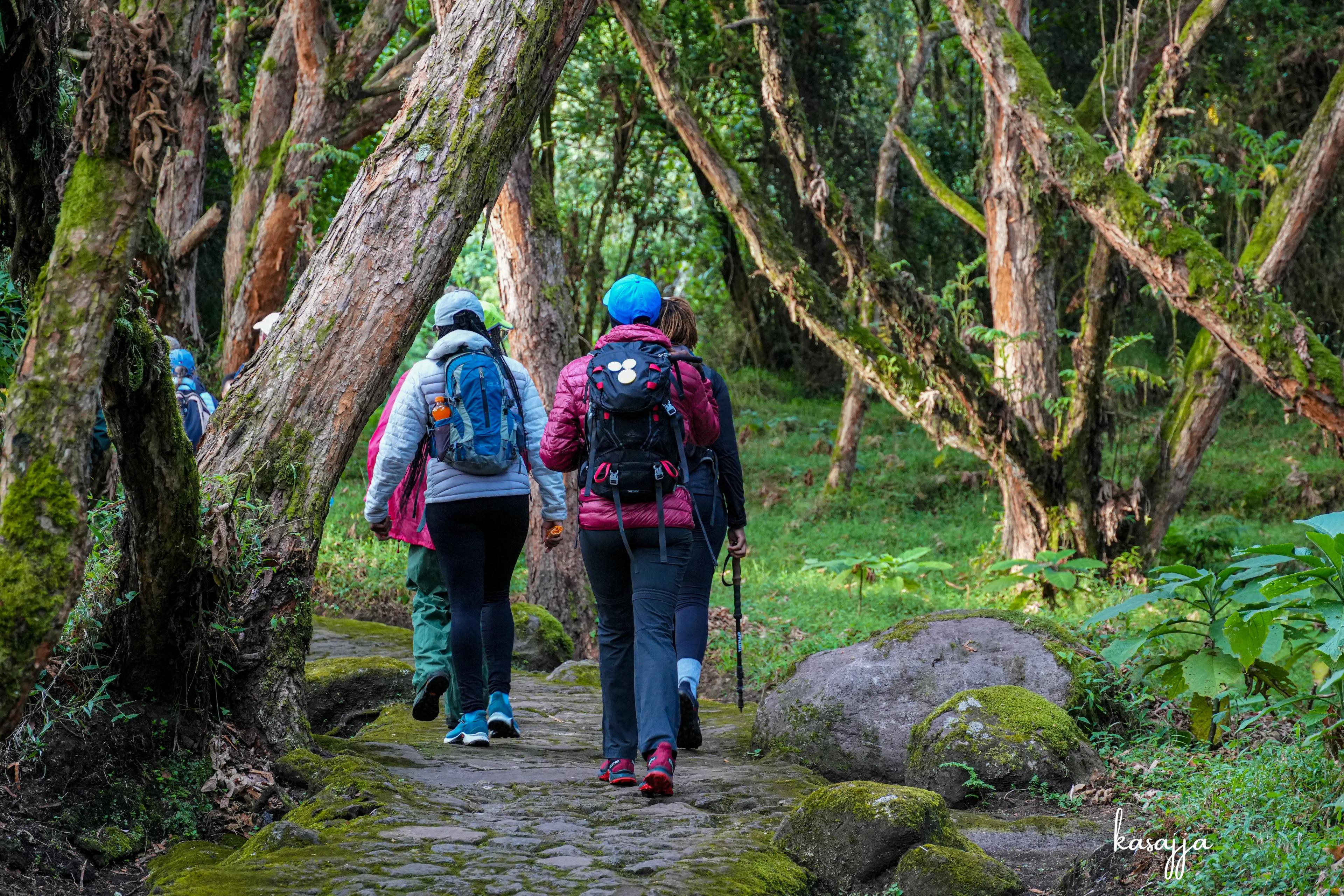
Learn how Outdoorsy Uganda rates hikes and expeditions, from Easy to Extreme, based on fitness, terrain, weather, risk and remoteness.
HOW WE RATE THE DIFFICULTY AND RISK OF OUR ADVENTURES
By Yusuf, Founder of Outdoorsy Uganda
When you're looking at a hike, mountain climb or adventure, one of the first things you probably want to know is, "How difficult is it?"
That's a fair question.
But difficulty isn't always as simple as looking at the distance or the height of a mountain. A short hike can be surprisingly difficult if it involves steep rock, exposure or technical climbing. Another hike might take much longer but have a straightforward trail and relatively low risk.
That's why at Outdoorsy Uganda, we've created our own five-tier system for describing the difficulty and risk of our adventures.
Difficulty is more than distance. Risk is more than steepness.
Our system looks at the whole experience, including how physically demanding the activity is, what kind of terrain you'll encounter, the environmental conditions, the risks involved and how remote the location is.
WHY WE CREATED OUR OWN CLASSIFICATION SYSTEM
We don't want someone to book an adventure simply because it says "easy" and then discover halfway through that it involves terrain they weren't prepared for.
We also don't want to scare people away from an adventure simply because it has a high elevation or takes several days.
The idea is to give you a clearer picture of what you're actually getting yourself into.
Our five tiers apply across our day hikes, mountain hikes, multi-day adventures, mountain expeditions, technical climbing activities and other remote outdoor experiences.
TIER 1 — EASY
Tier 1 activities are suitable for beginners and people with basic fitness.
These are generally straightforward experiences with established trails, limited elevation gain and little technical difficulty. There is normally minimal exposure, low environmental risk and relatively easy access if assistance is needed.
You don't normally need previous hiking experience for a Tier 1 activity, although you should still come with appropriate clothing, footwear, water and basic hiking essentials.
TIER 2 — MODERATE
Tier 2 is where things start becoming a little more demanding.
These activities are suitable for active beginners and people with a reasonable level of fitness. You may encounter longer distances, steeper sections, uneven ground, rocks, mud or slippery sections.
There may also be some environmental challenges, but emergency access is generally still relatively straightforward.
Previous hiking experience is helpful, but it isn't normally required.
TIER 3 — CHALLENGING
Tier 3 activities require a higher level of preparation.
These adventures are suitable for people with good fitness and some previous hiking experience. You can expect significant elevation gain, sustained climbs or descents, rough or rocky terrain and, depending on the route, some scrambling or increased exposure.
Weather and environmental conditions may also make the experience more demanding, and getting emergency assistance can take longer because of increased remoteness.
This is the point where we recommend that participants take their preparation seriously rather than simply deciding to "give it a try."
TIER 4 — DIFFICULT
Tier 4 is for experienced and well-prepared hikers.
These activities can combine significant physical demands with difficult terrain, exposure, challenging weather, high altitude or remote locations. Some may also involve technical sections or scrambling.
Another important difference is what happens if something goes wrong.
In a remote mountain environment, getting help isn't always quick or simple. Evacuation can be more complicated, and participants need to understand that before they begin.
If you're considering a Tier 4 adventure, you should carefully assess your fitness, experience and preparation before booking.
TIER 5 — EXTREME
Tier 5 is reserved for serious mountain and expedition activities.
These are not ordinary recreational hikes.
They can involve very high altitude, prolonged physical exertion, extreme or rapidly changing weather, technical climbing, glacier travel, advanced scrambling, significant exposure and very remote environments.
They may require specialist equipment, experienced guides and previous high-altitude or technical mountain experience.
Emergency evacuation can also be difficult and prolonged.
If an activity is classified as Tier 5, we want you to understand that proper preparation is not optional.
SO HOW DO WE DECIDE WHAT TIER A ROUTE GETS?
There isn't one single thing that determines the difficulty.
We look at five main areas.
The first is physical demand. This includes the distance, elevation gain and loss, steepness, duration, number of consecutive hiking days, the load participants carry and the physical effects of altitude.
The second is terrain and technicality. We look at whether the route involves ordinary hiking trails, uneven ground, mud and bogs, loose rocks, scrambling, steep rock, ropes, technical climbing or glacier and snow travel.
The third is objective risk. These are hazards that exist regardless of how fit you are. They can include exposure, cliffs, unstable terrain, falling rocks, river crossings, slippery sections, navigation challenges and wildlife.
The fourth is environmental conditions. Cold, snow, heavy rain, hail, heat, rapid changes in weather, strong winds and boggy terrain can all change how difficult an adventure becomes.
The fifth is remoteness and rescue. We consider how far the route is from roads and settlements, whether there is mobile network coverage, how accessible the trail is, what rescue services are available, how far medical assistance is and how long an evacuation could take.
WHY DISTANCE AND ELEVATION ARE NOT ENOUGH
Imagine two hikes.
One is 15 kilometres long but follows a well-maintained trail with gentle slopes and easy access to a road.
The other is only 7 kilometres, but involves steep rock, exposure, difficult weather and a remote location where rescue could take hours.
Which one is harder?
That's exactly why we don't classify our adventures using distance or elevation alone.
A short route can still carry significant risk, while a much longer route can be relatively straightforward. Our classification looks at the complete experience.
SOME RISKS CAN OVERRIDE THE NUMBERS
There are certain situations where a particular hazard is serious enough to influence the overall classification regardless of how short or physically easy the route might appear.
For example, a route with significant exposure shouldn't be classified as easy simply because it's short. A technical climbing route shouldn't be judged only by the number of kilometres involved. A remote route with very limited evacuation options may receive a higher classification even when the terrain itself isn't extremely difficult.
Extreme environmental conditions can also raise the overall classification.
This is important because we want the rating to reflect real-world risk, not just numbers on a map.
WE ALSO DESCRIBE THE TERRAIN AND RISKS
Two adventures can have the same overall difficulty rating and still feel completely different.
That's why our system also uses additional descriptions to tell you what kind of experience you're actually going to have.
A route may be described as forest, rocky, boggy, steep, technical, scrambling, snow and ice or glacier terrain.
We can also identify specific risks such as exposure, steep descents, altitude, remoteness, river crossings, wildlife, extreme weather, technical terrain or navigation difficulty.
These descriptions give you more information without creating dozens of different difficulty categories.
WHAT THIS MEANS FOR YOU
When you look at an Outdoorsy Uganda adventure, you shouldn't only look at the name and the number of kilometres.
Look at the overall tier.
Then look at the physical demand, terrain and key considerations.
A Tier 2 hike in a forest is very different from a Tier 2 adventure involving rocky or slippery terrain. A Tier 4 mountain expedition may be physically demanding, highly remote and difficult to evacuate from, even if the distance itself doesn't look particularly intimidating.
The classification is there to help you make a better decision before you put your boots on.
PREPARATION STILL MATTERS
A difficulty rating isn't a replacement for preparation.
Even an easy hike requires suitable clothing, footwear, water and basic hiking essentials. As the difficulty increases, so does the importance of fitness, experience, equipment and understanding the environment you're entering.
If you're unsure whether you're ready for a particular adventure, talk to us.
We'd much rather help you choose the right experience than have you arrive at the trailhead and discover that you've taken on something you're not prepared for.
WE KEEP REVIEWING OUR RATINGS
Mountains and trails change.
Weather changes. Trails change. Accessibility changes. Rescue arrangements change. New hazards can also be identified through the experience of our guides and participants.
That's why our classifications aren't something we create once and forget about.
We review routes when there are significant changes to the trail, accessibility, weather or environmental conditions, technical requirements, rescue access, route length, elevation or newly identified hazards.
THE OUTDOORSY UGANDA PRINCIPLE
At the end of the day, this whole system comes down to something very simple.
Difficulty is more than distance. Risk is more than steepness.
When you join us for an adventure, we want you to know what you're getting into.
Not because we want to make the mountains sound frightening, and not because every adventure needs a complicated grading system.
We simply believe that good adventures begin with good preparation.
Understand the challenge, respect the environment, listen to your guides and come prepared.
Then you can concentrate on what you came for in the first place:
to explore, to experience something new, and to come home with a story worth telling.
OUTDOORSY UGANDA — EXPLORE. CONSERVE. INSPIRE.
Ready to experience this yourself?
View Expedition Calendar