Altitude sickness can affect anyone, regardless of age or fitness. Learn what causes it, how to recognize the symptoms, and what you can do to stay safe while climbing the Rwenzori Mountains.
If you're planning to climb the Rwenzori Mountains, there's one subject you should understand before you arrive: altitude sickness.
Every year, climbers from around the world spend weeks preparing by buying hiking boots, waterproof jackets and warm sleeping bags. Those things are important, but many people forget to prepare for the one thing they can't pack in a backpack—how their body will react to high altitude.
From my many expeditions in the Rwenzori Mountains, I've seen altitude sickness affect all kinds of climbers. I've seen experienced mountaineers develop symptoms while first-time trekkers felt completely fine. I've also seen incredibly fit athletes struggle, while people with average fitness reached the summit without any issues.
The truth is simple.
Altitude sickness doesn't care who you are.
It doesn't matter how old you are, how fit you are or how many mountains you've climbed before. Understanding how altitude affects your body is one of the best ways to prepare for your expedition.
WHAT IS ALTITUDE SICKNESS?
Altitude sickness, also known as Acute Mountain Sickness (AMS), is your body's natural response to reduced oxygen at high elevations.
As you climb higher, the amount of oxygen in the atmosphere remains almost the same, but the air pressure becomes lower. This means every breath contains fewer oxygen molecules than your body is used to receiving.
Your body needs time to adjust.
If you gain altitude too quickly, or if your body struggles to adapt, altitude sickness can develop.
In the Rwenzori Mountains, many climbers begin noticing the effects above 3,000 metres, although symptoms can appear lower or much higher depending on the individual.
WHY DOES ALTITUDE SICKNESS HAPPEN?
At sea level, breathing feels effortless because your body receives plenty of oxygen with every breath.
As you climb towards 4,000 to 5,000 metres, especially on Mount Stanley and Margherita Peak, your body has to work much harder.
Your breathing becomes faster, your heart beats quicker, your body begins producing more red blood cells, and your muscles and brain have to work with less oxygen than they're used to.
These changes are completely normal.
Altitude sickness develops when your body cannot adapt quickly enough.
WHO CAN GET ALTITUDE SICKNESS?
The answer is simple.
Anyone.
One of the biggest myths in mountaineering is that only unfit people develop altitude sickness.
That simply isn't true.
I've seen marathon runners struggle while first-time hikers reached the summit without any problems.
Whether you're a professional athlete, an experienced climber or someone climbing your very first mountain, altitude sickness is always a possibility.
Being physically fit will make the climb more enjoyable.
It will not make you immune.
THE DIFFERENT TYPES OF ALTITUDE SICKNESS
Most people think altitude sickness is just one condition, but there are actually three different types.
Acute Mountain Sickness (AMS)
This is the most common form and the one most climbers experience.
Symptoms often include a headache, nausea, loss of appetite, unusual tiredness, dizziness, difficulty sleeping and shortness of breath during physical activity.
Most cases improve with rest, hydration and giving your body more time to acclimatise.
High Altitude Pulmonary Edema (HAPE)
HAPE is a serious condition where fluid begins collecting in the lungs.
Symptoms include severe breathlessness even while resting, a persistent cough, chest tightness, bubbling or crackling sounds while breathing, extreme weakness and blue lips or fingertips caused by low oxygen levels.
HAPE is a medical emergency.
Immediate descent and urgent medical attention are essential.
High Altitude Cerebral Edema (HACE)
HACE is the most dangerous form of altitude illness.
It occurs when swelling develops in the brain because of reduced oxygen.
Symptoms include a severe headache, confusion, poor coordination, difficulty walking in a straight line, slurred speech, unusual behaviour, hallucinations and eventually loss of consciousness.
HACE is life-threatening.
Immediate descent is the only safe option.
HOW CAN YOU REDUCE THE RISK?
Although altitude sickness can never be completely prevented, there are several things you can do to reduce your risk.
Climb slowly.
Your guides set the pace for a reason. Even if you feel strong, don't rush. The Rwenzoris reward patience, not speed.
Stay hydrated.
Drink water regularly throughout the trek because dehydration can make altitude symptoms much worse.
Eat well.
Many people lose their appetite at altitude, but your body still needs energy. Even if you don't feel like eating, make sure you continue having regular meals.
Avoid alcohol.
Alcohol affects your breathing, your hydration and your sleep, making it harder for your body to acclimatise.
Finally, get enough rest.
Your body does most of its recovery while you sleep.
CAN MEDICATION HELP?
Some climbers choose to take Diamox (Acetazolamide) to reduce the risk of Acute Mountain Sickness.
Diamox helps your body acclimatise faster by encouraging deeper and more frequent breathing.
However, it's important to understand that Diamox is not a replacement for proper acclimatisation. It cannot guarantee that you won't develop altitude sickness.
Always speak to your doctor before taking any medication.
WHAT SHOULD YOU DO IF YOU DEVELOP SYMPTOMS?
The answer is very simple.
Tell your guide immediately.
Don't wait to see if it gets better.
Don't stay quiet because you don't want to slow the group down.
Don't convince yourself that you'll "push through it."
The sooner your guide knows how you're feeling, the sooner they can assess the situation and decide what's best. Sometimes all you need is more water, more rest or a slower pace. Other times, the safest decision is to descend before your condition becomes serious.
There is no summit worth risking your life for.
WHY YOU SHOULD NEVER IGNORE SYMPTOMS IN THE RWENZORI MOUNTAINS
One thing many people don't realise about the Rwenzori Mountains is just how remote they are.
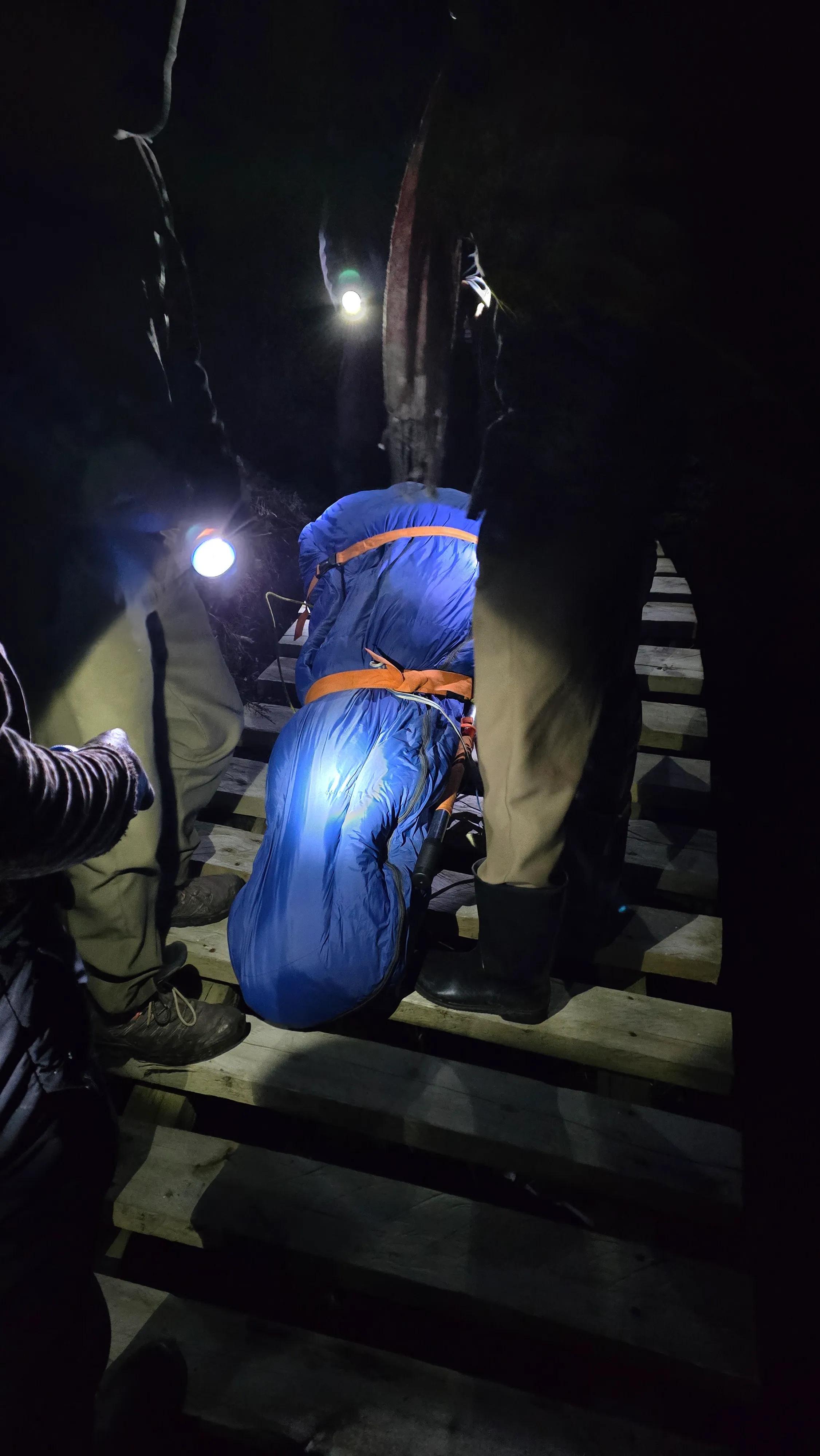
Once you're deep in the mountains, there is little to no reliable phone network. If someone becomes seriously ill or gets injured, calling for help isn't as simple as making a phone call.
Your guides must first get a message out to the rescue team. Only after that can the rescue team begin making their way to your location.
Even after they have been notified, a rescue usually takes at least three hours, and depending on where you are on the mountain and the weather conditions, it can take up to twelve hours before the rescue team reaches you.
Many people assume a helicopter can simply fly in and evacuate someone.
That isn't possible in the Rwenzori Mountains.
The terrain is incredibly rugged, the weather changes in minutes, thick cloud cover is common, and there are no practical helicopter rescue operations on the mountain. In almost every situation, the rescue team has to walk to your location, carrying the equipment needed to evacuate you safely.
That's why I always give climbers the same advice.
Never ignore how your body feels.
Whether it's a headache, nausea, dizziness, unusual tiredness, chest pain or simply the feeling that something isn't right, tell your guide immediately.
Don't wait.
Don't try to be the strongest person in the group.
And don't let pride make decisions for you.
From my experience in the Rwenzori Mountains, I've learned that the mountain usually gives you warning signs before something becomes serious. The sooner your guide knows what's happening, the sooner they can help. Sometimes that means resting for a while, drinking more water or slowing your pace. Other times, it means making the difficult decision to descend.
The mountain will always be there.
Your life is far more important than the summit.
FINAL THOUGHTS
The Rwenzori Mountains are one of Africa's most spectacular places, but they demand respect.
Respect the altitude.
Respect your guides.
Respect your own body.
The strongest climber isn't the fastest one.
The strongest climber is the one who knows when to speak up, when to slow down and when to make the safe decision.
Understand altitude sickness before you arrive, prepare properly and listen to your body throughout your expedition.
Do that, and you'll give yourself the best chance of returning home with incredible memories from one of Africa's greatest mountain adventures.
Ready to experience this yourself?
View Expedition Calendar